 EN

The Company Is Well-Known
Seeder Series
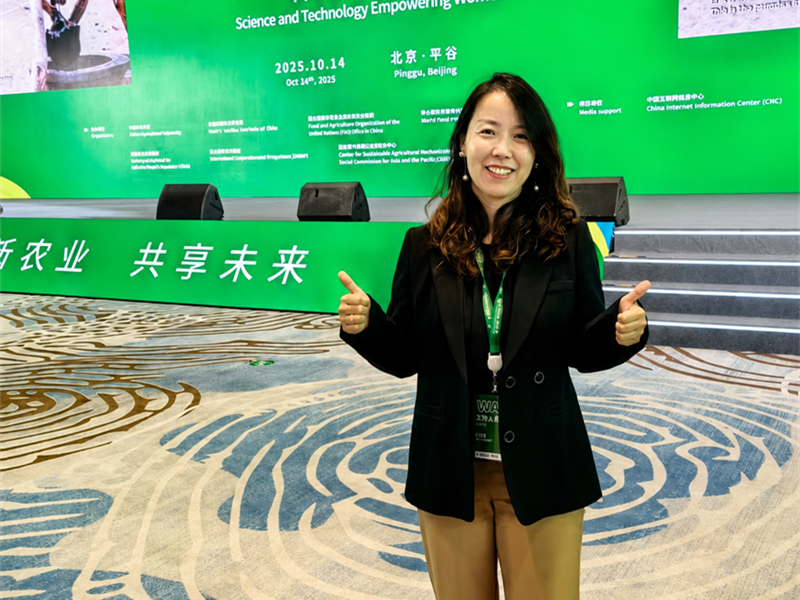
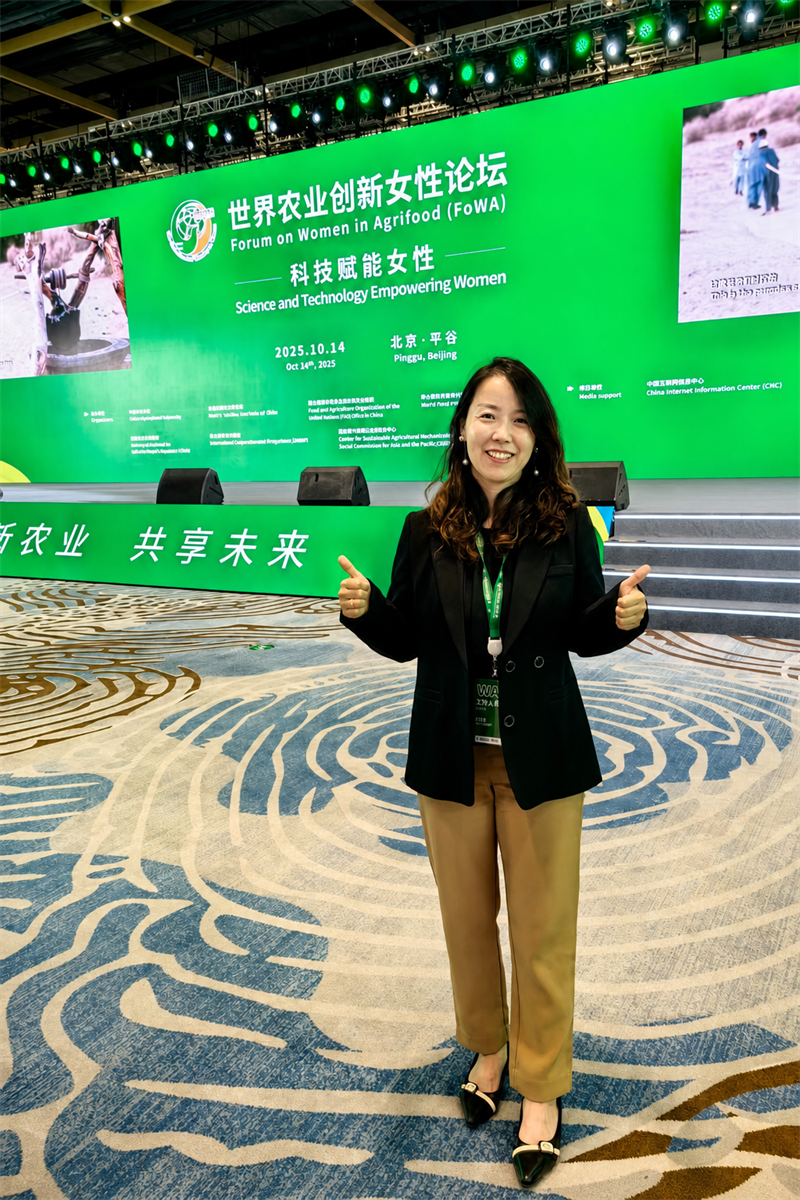
On 14 October 2025, the World Agrifood Innovation Conference (WAFI) convened in Pinggu, Beijing, with a stated focus on building a resilient food supply system. Within that program, the Forum on Women in Agrifood ran as a dedicated session with its own theme: "Science and Technology Empowering Women".
A dedicated session is not a sidebar: it sets its own agenda, draws its own speakers and puts a subject on the record as a standing topic. That is the context in which Sandy, principal of Agripros (Beijing Worldlink Commerce Co., Ltd.), was invited as a distinguished female entrepreneur representative to deliver a keynote.
The invitation matters less for the stage than for the position it implies. A machinery supplier was asked to address an agrifood audience on global expansion, cross-border collaboration and women-led business — subjects that sit outside the usual specification conversation and inside the commercial one.
Caption: Sandy, principal of Agripros, at the 2025 WAFI Forum on Women in Agrifood, Pinggu, Beijing.
Conference themes signal what an industry considers unsolved. This one put a resilient food supply system ahead of yield, and the choice is not rhetorical.
Yield is a property of a field in a season. Resilience is a property of a system across seasons — its ability to absorb a bad year, a broken link, a closed border or a delayed shipment without collapsing into shortage. A program organised around resilience has to talk about storage, logistics, finance, machinery and service, because those are the parts that fail before the harvest does.
For equipment suppliers, that framing is an opening. A machine is not only a productivity input; it is a resilience input, because timeliness converts a good season into a harvested crop. A planter that arrives late does not reduce yield in the abstract — it removes the option of planting at all.
Food-security conversations tend to organise around crops, land and water. Machinery enters later, often as a procurement line rather than a policy subject — which is a mistake in both directions.
Agronomy sets what is possible; machinery sets how much of it happens on time. A package of practices that requires planting inside a narrow window, fertiliser at a defined stage and protection before a threshold is crossed is, operationally, a schedule. Machines are what make a schedule survivable when labour is unavailable, when weather compresses the window, or when the season arrives early.
This is where the commercial and developmental arguments converge. A supplier that can deliver equipment, parts and service into a rural district contributes to the same resilience — not because the equipment is donated, but because the system keeps working when a link fails.
Sandy's keynote described the shift from products to partnerships, drawing on Agripros' hands-on experience in overseas markets. The distinction is easy to state and hard to execute, because it changes what a company is measured on.
A product sale ends at delivery. A partnership continues through the season, which means the supplier becomes responsible for questions a shipment cannot answer: whether the machine suits the soil, whether the operator was trained, whether a part is available in the district, whether the next batch will match the last one.
Three elements were named as the basis of trust in that transition — localized product adaptation, consistent quality and delivery systems, and long-term brand building. They are not separate programs. Adaptation without delivery consistency produces a machine that fits the field and misses the season; consistency without adaptation produces a reliable machine applied to the wrong conditions; brand building without either is advertising.
Read together, the three describe one operating discipline: make the product fit, make the delivery repeatable, and let the record accumulate.
Localisation is often treated as a marketing step — a translation, a decal, a voltage change. In machinery it is a specification step, and the point where an export relationship becomes technical or stays transactional.
A specification sheet describes a machine at reference conditions. A field has its own conditions: soil texture and structure, stone content, slope, plot geometry, crop variety and row system, the operator's experience, and the maintenance realistically available. The gap between sheet and field is where most early failures occur, and they are rarely reported as specification failures — they are reported as breakdowns.
Adaptation closes that gap before delivery: matching row configuration to the buyer's system, setting depth control to the soil, choosing metering for the seed actually planted, and confirming that the implement fits the tractor the buyer owns rather than the one in the brochure.
None of that is visible in a quotation. All of it is visible in the second season, which is when a buyer decides whether to reorder.
Consistency is an unglamorous claim and a difficult one to sustain. In machinery trade it means this season's delivery matches last season's, the part ordered fits the model in the field, and the documentation matches the shipment.
Each is an operational promise rather than a marketing one. A buyer running a fleet cannot absorb variation: a component changed without notice becomes a stock problem, and a manual that no longer matches the machine becomes a training problem — for a service provider working against a hectare target, both become downtime.
That is why consistency functions as a brand asset in this industry. Buyers cannot audit a factory on every order, so they use the record instead: whether previous deliveries matched, whether claims were settled, whether the documentation held up at customs.
A supplier with that record can price above a supplier without one, because the buyer is not comparing machines. They are comparing the risk of an interrupted season.
The keynote described a move from selling machines to delivering service, enabled by a one-stop product range and a global service network. The phrase is common; the operating consequences are not.
A one-stop range changes the supplier's role from filling an order to configuring a system. When a buyer can source land preparation, planting and the implements that connect them from one supplier, the interfaces between those machines become the supplier's problem rather than the buyer's. That is a harder commitment than breadth suggests, because an interface failure is usually discovered by the customer.
A service network changes the geography of accountability. Selling into a market and supporting it are different businesses: the second requires parts positioned near the work, people who can diagnose a fault without a factory, and a training routine that reaches operators rather than only distributors.
Together they shift the revenue pattern: service, parts and repeat supply are less cyclical than new-unit sales, which matters where financing moves faster than agronomic need.
International platforms are often evaluated as visibility opportunities — a stage, a photograph, a mention. For an exporter, the more durable function is different.
A conference of this kind assembles the parties a cross-border deal eventually needs: institutions that define standards, projects that specify equipment, distributors looking for a range, and technical people who can test a claim. It sets the vocabulary in which those parties describe a problem, which matters because a supplier whose language does not match the buyer's is easily excluded before any technical discussion begins.
It also filters the other way. Presenting to institutions and project operators exposes a company to questions a price-driven distributor would never ask — about documentation, service radius, compliance and delivery record. That exposure is uncomfortable and useful.
None of this converts into orders at the venue. It converts into a shorter path the next time a project needs a supplier who can be described in terms the sector already uses.
The case for women in agri-tech is usually made in terms of representation. The structural argument is more practical.
Cross-border machinery trade runs on long cycles and multiple parties: an agronomist, a freight forwarder, a customs broker, a distributor, a service technician and a finance provider all have to stay aligned from quotation to harvest. The work is coordination under uncertainty, sustained across time zones and seasons. The roles that hold those threads — commercial management, project delivery, after-sales — determine whether a deal survives its own complexity.
Sandy's contribution, as described, was to argue that women leaders create distinct value in manufacturing and international trade, and to call for more women to join agri-tech innovation and global business. The claim is not symbolic: the capability the sector needs — patient coordination, relationship continuity, attention to operational detail — is a capability rather than a demographic.
An appearance of this kind is a signal, not a result. It indicates that a platform recognized a supplier as worth a keynote, and that its narrative is legible to an institutional audience. It does not indicate orders, partnerships or technical approval.
For buyers, the test is what follows. Does the company's service claim survive contact with a project specification? Do its documents match its machines? Does the record accumulate in the markets where the buyer operates?
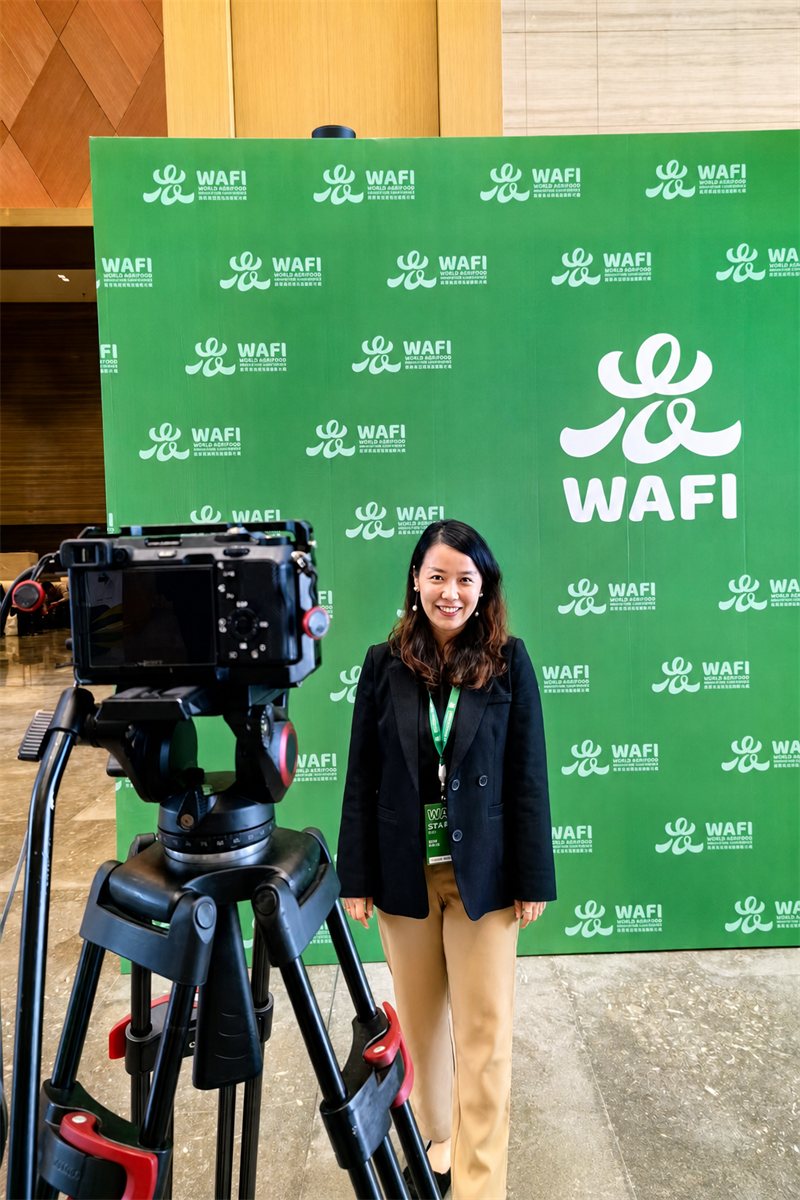
Agripros describes the appearance as a key milestone in its global brand journey — one that expands its cooperation network and strengthens its brand presence in overseas markets. It states that it will continue engaging in global industry dialogues and deepening cross-border partnerships, bringing reliable agricultural machinery and professional service to farmers and partners worldwide.
That is a statement of direction rather than a commitment. The evidence for it will be produced in the field, in the seasons that follow, and in whether the partnerships described from a stage become specifications a buyer can verify.
_Caption: Agripros at the WAFI 2025 conference venue in Pinggu, Beijing.
Discover our advanced agricultural machinery, including seeders, sprayers, harvesters, and more. Designed for large plantations and farms, these machines boost productivity and efficiency worldwide. Explore product details, download manuals, and take the next step in agricultural innovation.


Expert teams ensure quick installation and seamless commissioning for all agricultural machines worldwide.

On-site and remote training programs empower operators for efficient and safe machinery usage.

Fast global shipping of genuine spare parts, guaranteeing machine uptime and operational continuity.

Round-the-clock expert support via phone and online channels for fast issue resolution globally.

