 EN



The Company Is Well-Known
Seeder Series
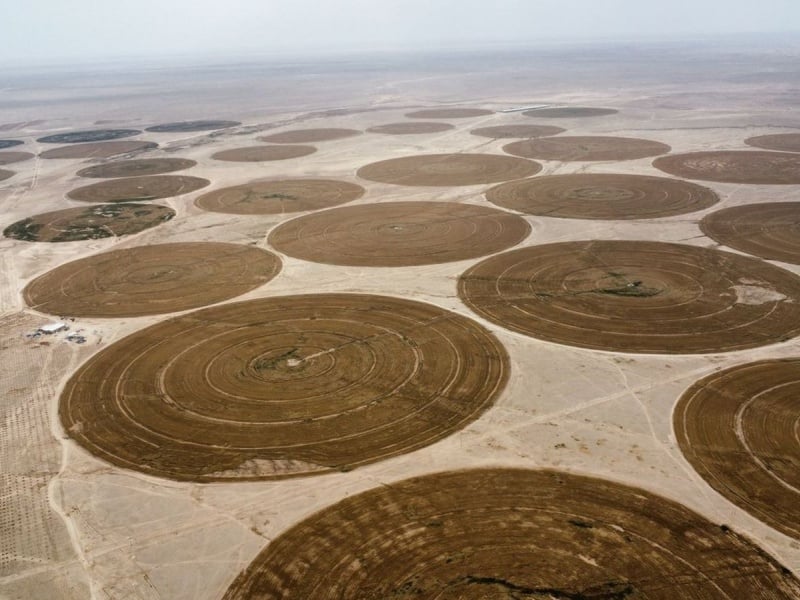
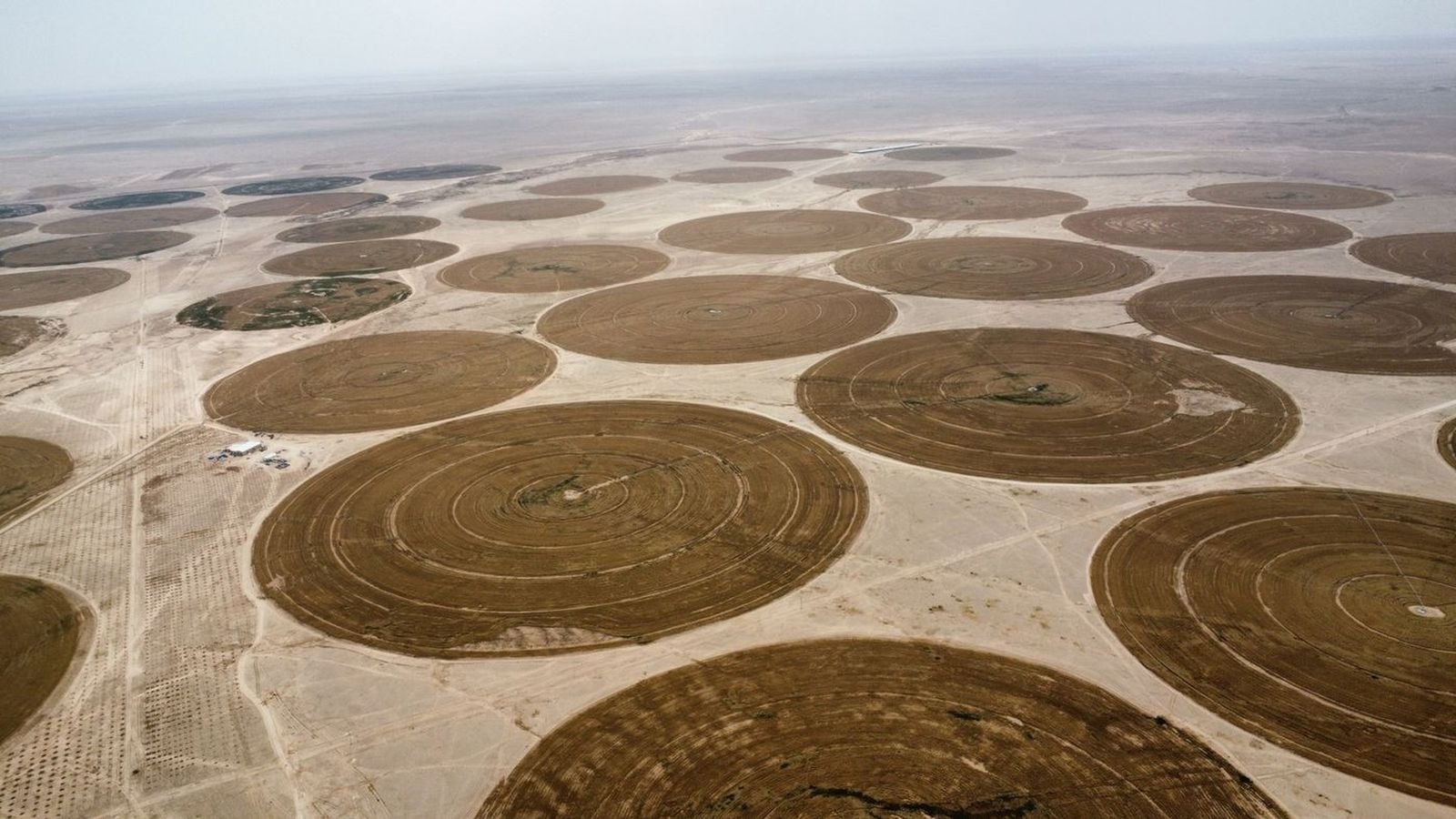
The New Delta project was inaugurated on 17 May 2026, marking the launch of a 2.2-million-feddan land reclamation project (roughly 924,000 hectares) — the latest phase of a desert-farming program that is steadily redrawing the map of demand for agricultural machinery in North Africa.
For suppliers of seeding, tillage and irrigation equipment, the question is no longer whether Egypt's desert reclamation is real, but how fast the new land moves into production — and which machinery specifications the country's commercial farm operators will need.
That framing matters because reclamation and farming run on different clocks. Land can be handed over in a season; a production system takes longer to settle, and the equipment decisions made early tend to stay in place.
Egypt's strategy under the Ministry of Agriculture and Land Reclamation combines horizontal expansion (new cultivated land) with vertical gains (better varieties, smarter water use). The reported picture:
Cultivated land has exceeded 4.2 million hectares, with total cropped area of 7.35 million hectares.
More than 1.47 million additional hectares have been reclaimed in regions including the New Delta, Toshka and Sinai.
Irrigation systems have been modernized across 200,000 hectares, with field irrigation upgraded on a further 105,000 hectares.
Seventeen high-yield crop varieties were introduced in 2025, with 14 more expected in 2026; a digital farmer smart-card system already covers 3.53 million hectares.
Agriculture contributes around 15% of Egypt's GDP and employs roughly a quarter of the workforce, which is why the government frames reclamation as food security policy as much as land policy. New Delta's primary crops — wheat, maize and sugar beet — are aimed at reducing import dependence, with wheat self-sufficiency the flagship target.
The cropped-area figure is the one to watch: it sits well above cultivated land, so the same ground is worked more than once a year — a machinery utilisation story before an area story.
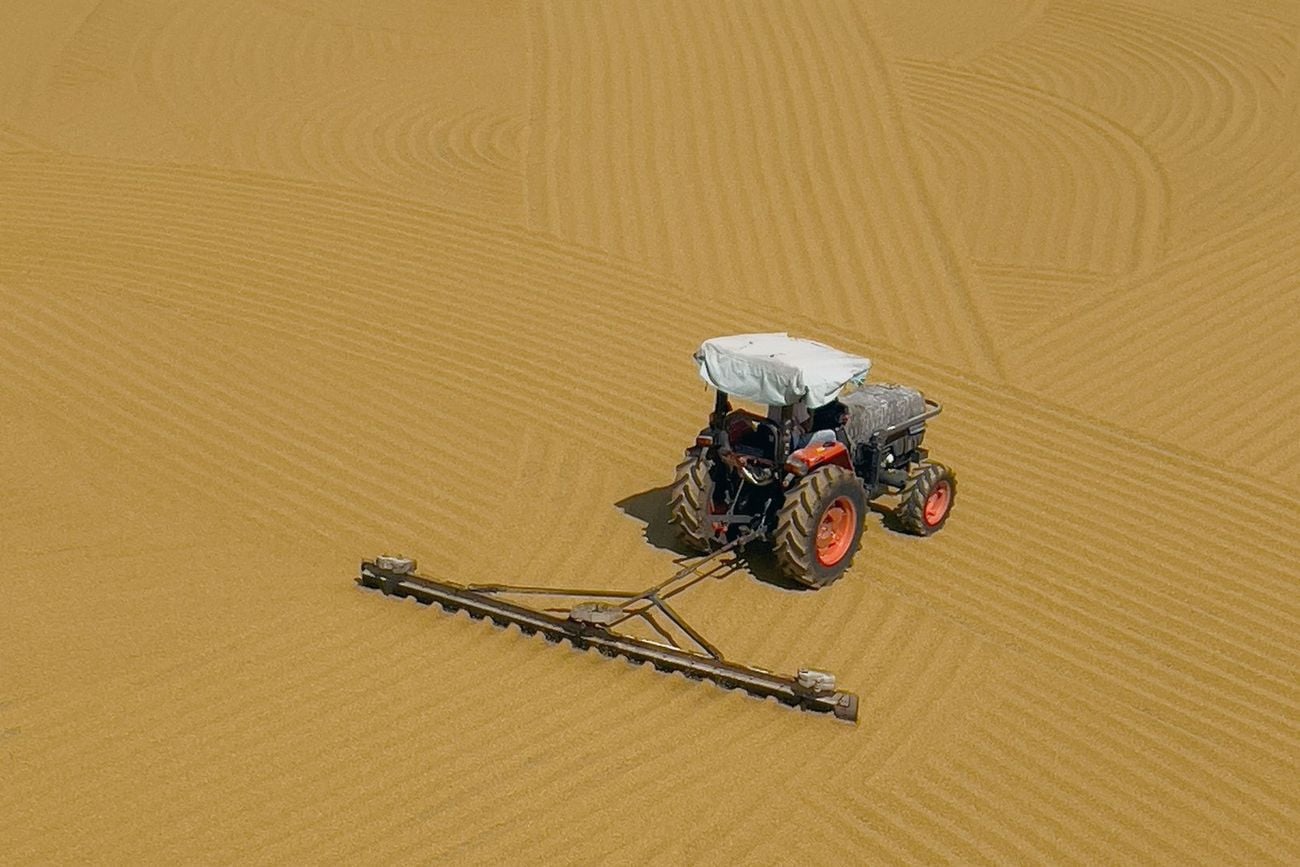
Newly reclaimed desert land is not a scaled-up version of Nile Delta farming. Three properties of the new ground change the equipment brief.
Salinity. Desert soils, and the irrigation water that serves them, carry salts that accumulate at the root zone as water evaporates. Equipment working a saline profile has to handle crusting at the surface and a root zone that responds differently to the same input.
Organic matter. Reclaimed sand and calcareous ground start with very little. Until it builds, the soil holds neither nutrients nor water the way delta silt does, which changes how fertiliser placement and irrigation scheduling have to work.
Infiltration. Water movement through light, weakly structured desert soil is uneven across a field. A machine that assumes uniform moisture will place seed into conditions that vary row to row.
None of this appears in a brochure; it appears in the first season — which is why operators in the new zones ask for field evidence rather than catalogue claims.
Reclaimed plots are typically served by drip and center-pivot systems, with soil-moisture sensors, automated irrigation and satellite crop monitoring now standard in the flagship projects.
That geometry constrains planting. Under a pivot, row direction and spacing have to work with the machine's travel pattern rather than against it. Under drip, the seed line has to sit inside the wetted band instead of between emitters — a decision taken at planting that cannot be corrected at emergence.
The practical consequence is a preference for precision planters and seeders with row-spacing flexibility rather than broadcast equipment. Broadcast works where water arrives evenly and the crop can compensate for an uneven stand. In a pivot or drip system it does not, because irrigation cannot make up for a plant that never established. The shortfall surfaces as a yield map at harvest.
Suppliers who can adjust row configuration to a buyer's irrigation layout, and document how that adjustment was set, are answering a question the buyer would otherwise discover in the field.
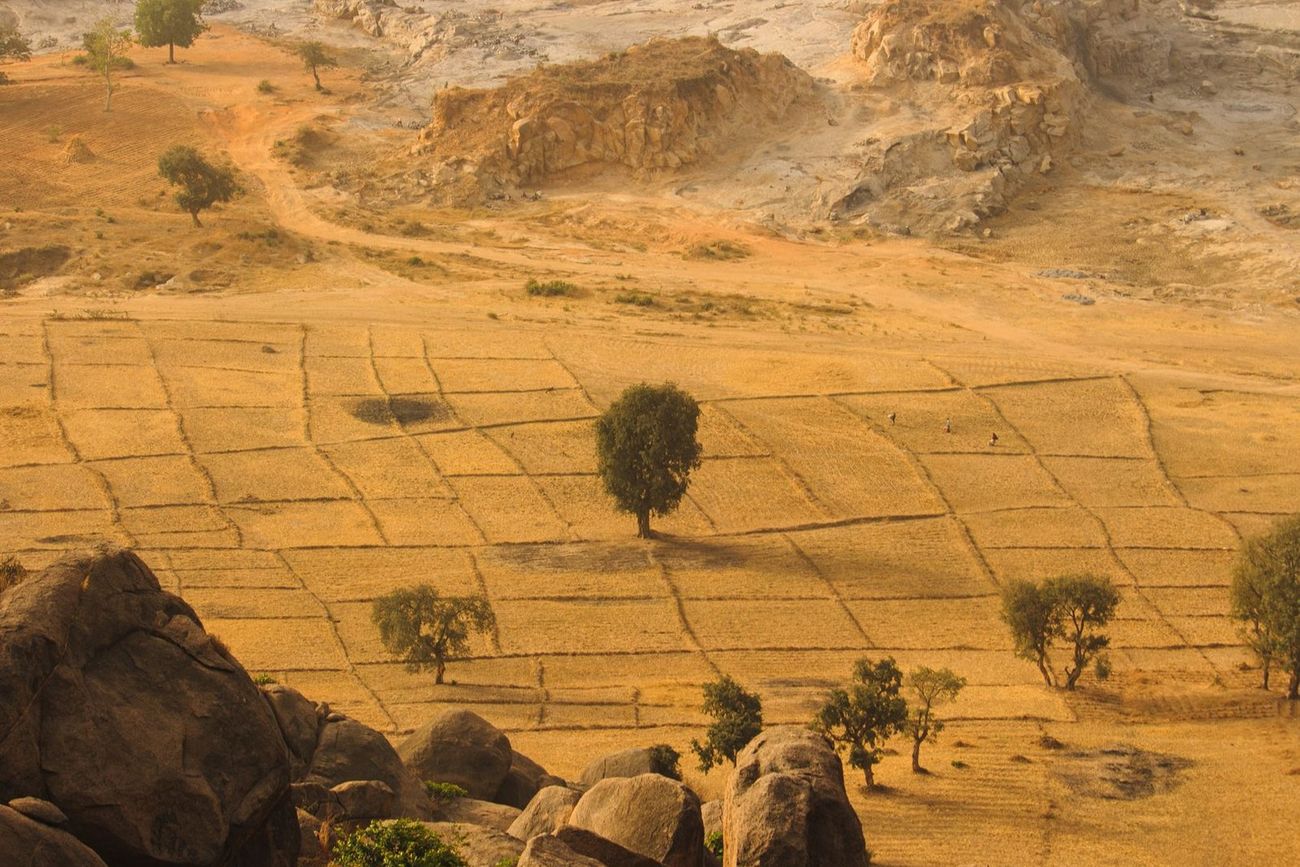
Sandy and calcareous desert soils demand different seed metering, depth control and press-wheel design than heavy Nile silt. Operators buying for New Delta, Toshka and Sinai plots are increasingly specifying machines proven on light soils.
The reasons are mechanical. Seed metering that works on a firm, moist seedbed can lose accuracy when the surface is dry and loose, because the furrow does not hold its shape. Depth control that relies on soil resistance becomes less dependable when resistance is low and variable. Press wheels that close a silt furrow may leave a sandy furrow open, costing germination moisture in the hours that matter most.
The specification conversation therefore has to include the soil, not only the crop. A machine configured for maize on silt is not automatically right for maize on sand, even where row spacing and seed rate are identical — and the difference does not show up in the first pass, but in the stand.
Large state-backed and commercial operations, rather than smallholders, dominate the new land. That changes who evaluates the machine and what they are measured on.
A smallholder buys a tool that has to justify itself against labour. A commercial operation buys an asset that has to justify itself against a capital plan, which is why its buyers weigh total cost of ownership, parts availability and after-sales support alongside unit price.
The shift has a second effect: decision cycles are longer and specification documents are more formal. Equipment is compared on written criteria, and a supplier who cannot state depth accuracy, row-spacing range or service response in writing is at a disadvantage before the demonstration begins.
For exporters used to selling on price into distributor channels, this is a different sale. The buyer is not looking for the cheapest machine. They are looking for the machine they can defend to a board, in a program that will be reviewed against targets.
A matched package is what tenders in the reclamation zones increasingly ask for, and it is not a bundle discount. It is a set of settings that agree with each other.
Land preparation decides the seedbed the planter will meet. The planter decides where seed sits relative to the wetting pattern. The irrigation layout decides the row geometry that both have to respect. Change one element and the other two need revisiting, which is why the package has to be specified as a package rather than assembled from quotations.
The failure mode is familiar in new reclamation zones: a tillage tool that leaves a surface too loose for the planter's depth control, or a planter configured to a row width that does not align with the pivot's travel. Each machine works as specified. The package does not.
Suppliers who can present the configuration as one document — with the interfaces named — remove a coordination cost the buyer would otherwise carry across separate purchases.
Reclamation zones are, by definition, away from established farming infrastructure. That makes service radius a decision variable rather than an afterthought.
Buyers in these zones tend to ask the same questions. How far is the nearest parts stock, and what is held there rather than ordered. Who performs the first season's adjustments, when settings usually need revision once the machine meets the actual field. And what happens to a machine that fails inside a short planting window, when a replacement part cannot wait for a shipment.
The answers set the real cost of the machine, not the purchase price. A planter idle for a week in the planting window costs more than the gap between two quotations.
This is also where supplier structure becomes visible. A distributor with a regional warehouse answers differently from an exporter shipping from origin, and a buyer comparing the two is comparing service models, not only machines.
1. The planting window is seasonal and recurring. Egypt's winter wheat campaign — the country is among the world's largest wheat importers — gives the new acreage a concrete, annual demand rhythm for seeding equipment. Demand concentrates into a window, which makes delivery timing part of the product rather than a logistics detail.
2. Bundles beat boxes. Tenders and dealer demand in the reclamation zones increasingly ask for matched packages: land preparation + precision seeding + irrigation-compatible row configurations, backed by local parts and service. A supplier selling single machines is competing against suppliers selling a configured system.
3. East-meets-desert specification work is the differentiator. Suppliers who document performance on sandy/calcareous soils — with real field data rather than brochure claims — have a credible story for Egyptian operators who are themselves under pressure to prove yields on new land. That documentation is also what lets the buyer justify the choice internally.
Egypt's desert transformation is a decade-long program, not a single season's story. For farm machinery exporters with the right specification depth and service commitment, the New Delta is less a one-off order than a new, durable market segment in North Africa.
The sequence is predictable. Land is opened, irrigation is installed, and the equipment question arrives with the first planting campaign. Suppliers specified before that campaign hold the account. Suppliers who arrive during it are answering a tender someone else wrote.
The commercial question is where the first orders land. Reclamation programs normally move from civil works to agronomy in phases, and equipment demand follows the phase boundary rather than the announcement itself. Suppliers watching this program should watch the irrigation commissioning schedule, because planting follows water, not the other way round.
Discover our advanced agricultural machinery, including seeders, sprayers, harvesters, and more. Designed for large plantations and farms, these machines boost productivity and efficiency worldwide. Explore product details, download manuals, and take the next step in agricultural innovation.


Expert teams ensure quick installation and seamless commissioning for all agricultural machines worldwide.

On-site and remote training programs empower operators for efficient and safe machinery usage.

Fast global shipping of genuine spare parts, guaranteeing machine uptime and operational continuity.

Round-the-clock expert support via phone and online channels for fast issue resolution globally.

