Where the loss happens
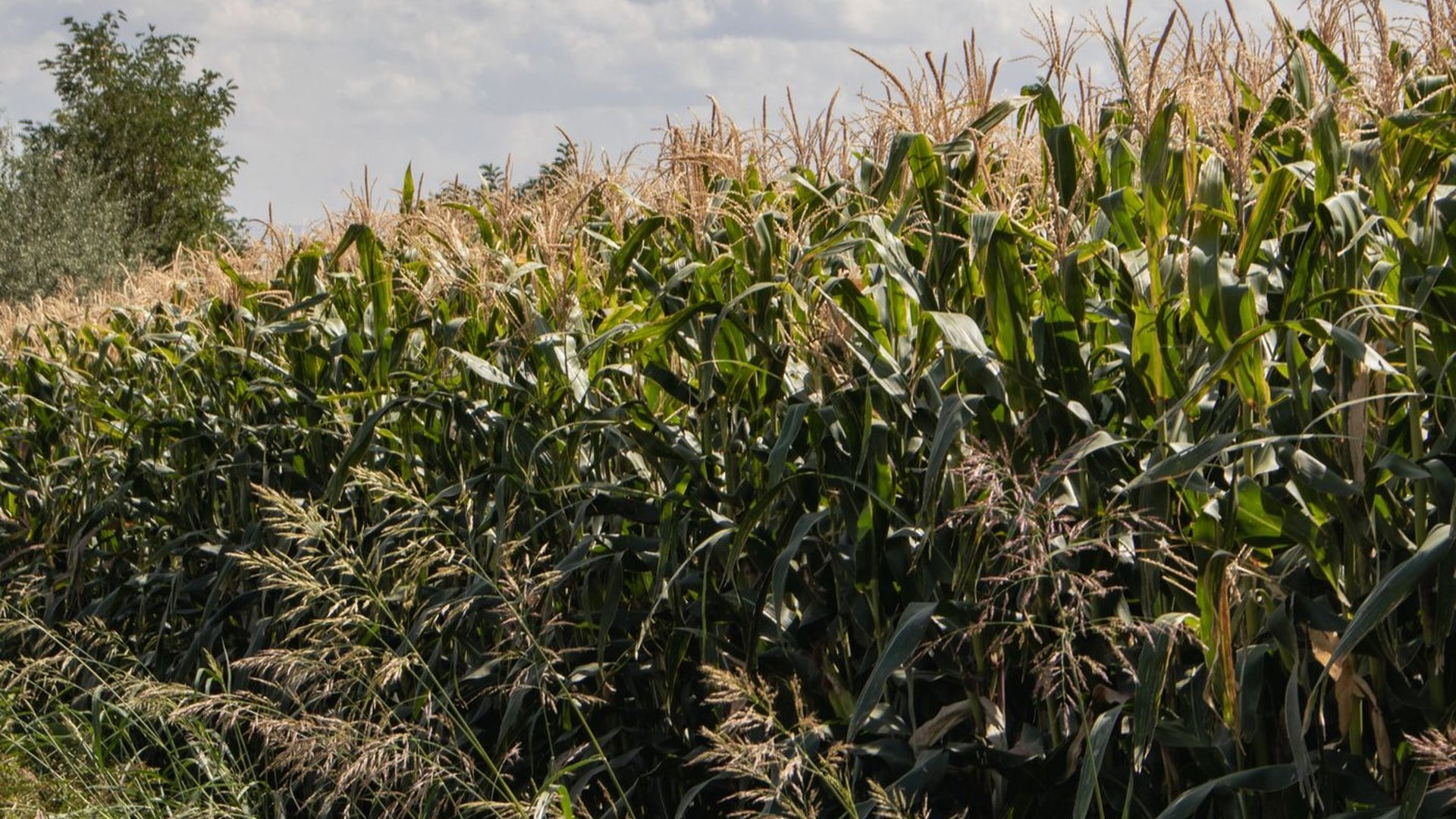
Transplanting is where a vegetable crop stops being a nursery problem and becomes a field problem, and most of the loss in this operation is decided by three things: how the seedling is set, how evenly it is spaced, and whether the bed was ready when the machine arrived.
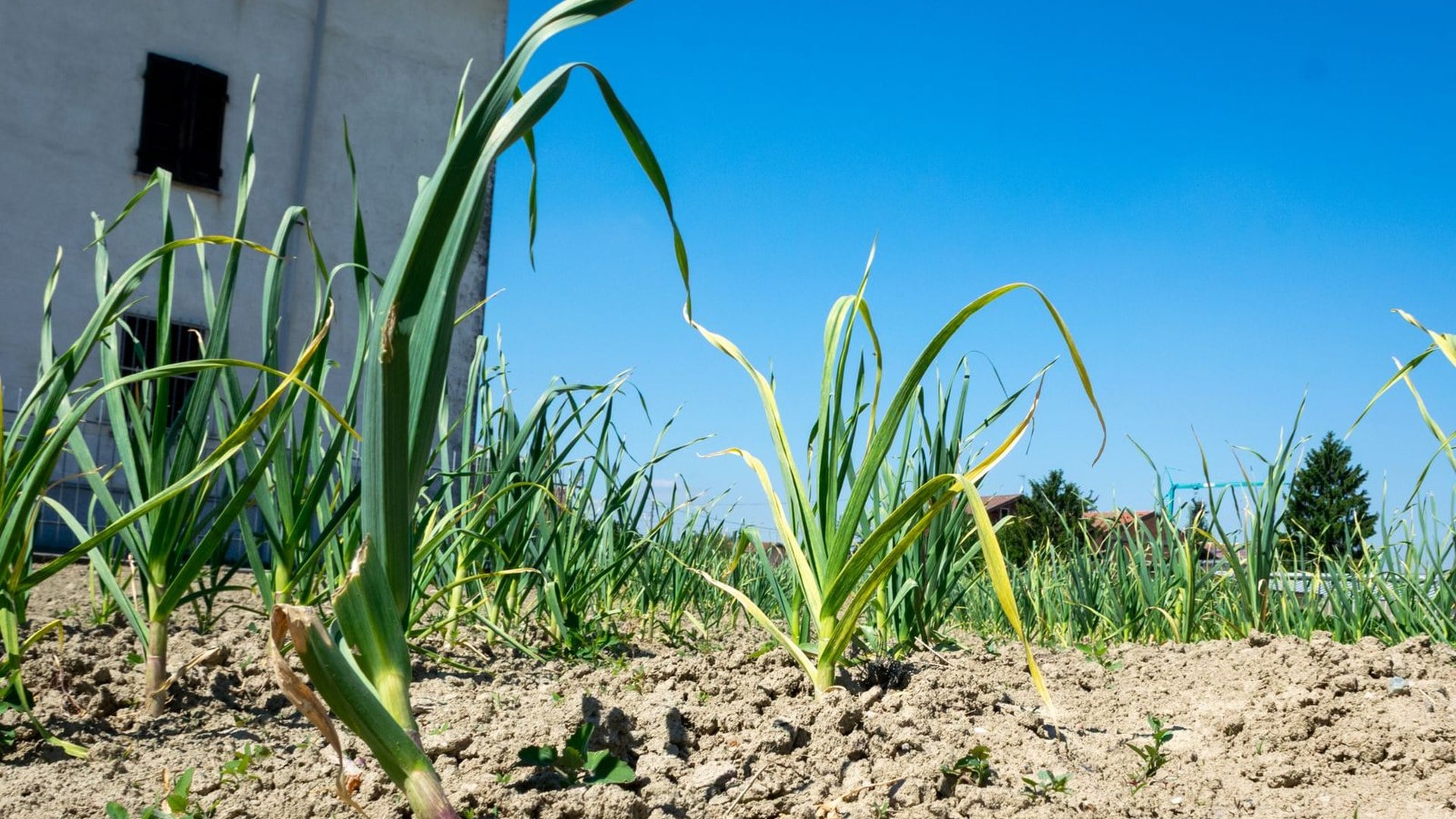
The first is depth and soil closing. A seedling set too deep buries the growing point; set too shallow with the soil left open, the roots dry out before they can take. Neither failure is visible on the day of transplanting — it appears as a gap in the row two weeks later, and by then the seedling cannot be replaced. This is why depth and closing are set for the soil type and the bed preparation rather than taken from a fixed figure on a specification sheet.
The second is spacing. Market spacing for chili, tomato and eggplant is a decision the grower makes, not the machine: it varies with variety, season and the cultivation that follows. A transplanter that holds one spacing forces the grower to change the crop plan or accept a stand that does not match the weeding and spraying equipment.
The third is labour. Hand transplanting consumes a crew for the length of the planting window, and the window is short. On a plot where the crew cannot be assembled in time, the seedlings age in the tray and the yield loss happens before the field is touched.
The transplanting solution
We sell one vegetable transplanter: a two-row self-propelled unit, model 233-1, built for chili, tomato and eggplant seedlings. It is deliberately a single machine rather than a range, because a two-row walk-behind covers the plot sizes where hand transplanting is the binding constraint, and it is the configuration we can support with parts and documentation.
The settings that decide whether it fits your field:
-
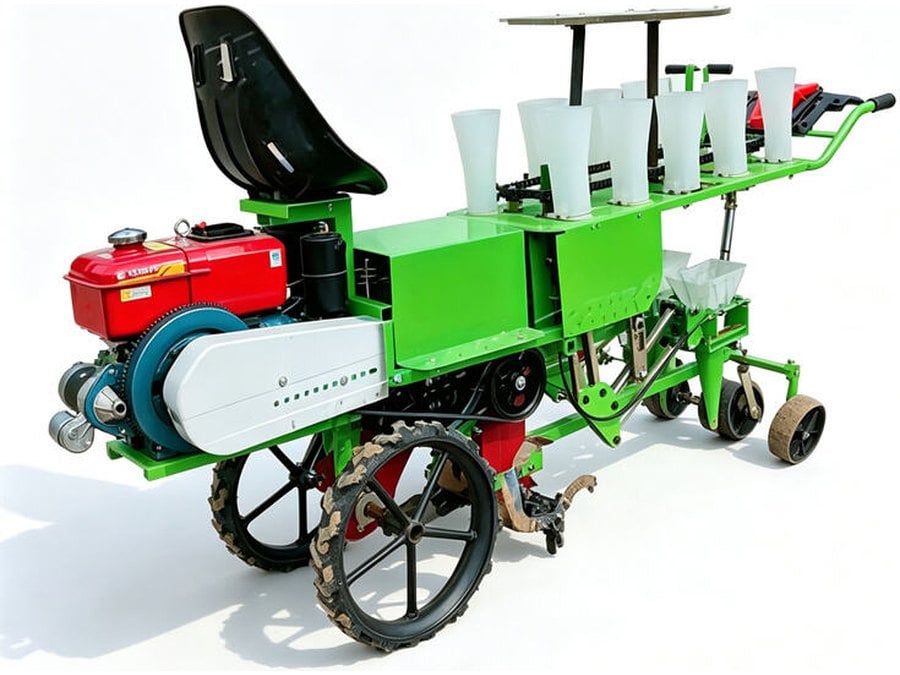
Plant spacing 18–70 cm, adjustable on the machine. This is the number that lets one unit serve different crops and different market specifications without changing parts.
-
Row spacing 26 cm as standard. Row centres are customized to your bed width at order, so the machine is built to the bed rather than the bed being re-cut to the machine.
-
Working efficiency 3,000–4,000 plants per hour, about 0.6 mu — roughly 400 m² — per hour. That is the figure to compare against your crew's rate and your planting window.
-
Two engine options: a 7.5 HP gasoline engine, or a 176 diesel rated 5 HP. Gasoline where the machine must stay light; diesel for continuous commercial work.
-
Seedling delivery set to your tray format, and planting depth and soil closing set for your soil type and bed preparation. Both are confirmed at order because they depend on the seedling and the ground, not on a factory default.
-
CE marked, EU Machinery Directive 2006/42/EC, with 230 kg all-up weight and a 270 × 70 × 130 cm package.
One boundary matters. The standard machine works on flat, prepared land; on-ridge transplanting is built as a customized machine to your ridge geometry. If your crop goes on ridges, say so before the quotation, because it is a different build rather than an adjustment.
Recommended equipment
| Operation |
Recommended product |
Key specifications |
Main advantages |
| Transplanting chili, tomato, eggplant |
Vegetable Transplanter Double Row (233-1) |
2 rows | 18–70 cm plant spacing | 26 cm row spacing (customizable) | 3,000–4,000 plants/h | 7.5 HP gasoline or 176 diesel 5 HP | 230 kg |
Spacing adjustable across crops; one operator, one pass |
| On-ridge transplanting |
On-ridge version of 233-1 |
Built to your ridge geometry |
Matches the bed you already form rather than requiring flat land |
| Other bed widths or row counts |
Customized configuration |
Available on request |
Row centres and frame set to your bed before quotation |
Scenario × machine quick reference
| Scenario |
Crops |
Bed condition |
Recommended product |
Rows |
Plant spacing |
Drive |
| Market garden, hand transplanting today |
Chili, tomato |
Flat, prepared |
233-1 double row |
2 |
18–70 cm |
7.5 HP gasoline |
| Commercial vegetable block |
Tomato, eggplant |
Flat, prepared, bed width fixed |
233-1 double row, row centres set to bed |
2 |
18–70 cm |
Gasoline or diesel |
| Raised-bed or ridge system |
Chili, tomato, eggplant |
Ridged |
On-ridge build |
2 |
18–70 cm |
Gasoline or diesel |
| Contract transplanting across plots |
Mixed vegetable seedlings |
Varies by customer |
233-1 double row |
2 |
Re-set per plot |
Gasoline for transport weight |
| Grower with a different row count |
Any of the three crops |
Any |
Customized configuration |
On request |
On request |
On request |
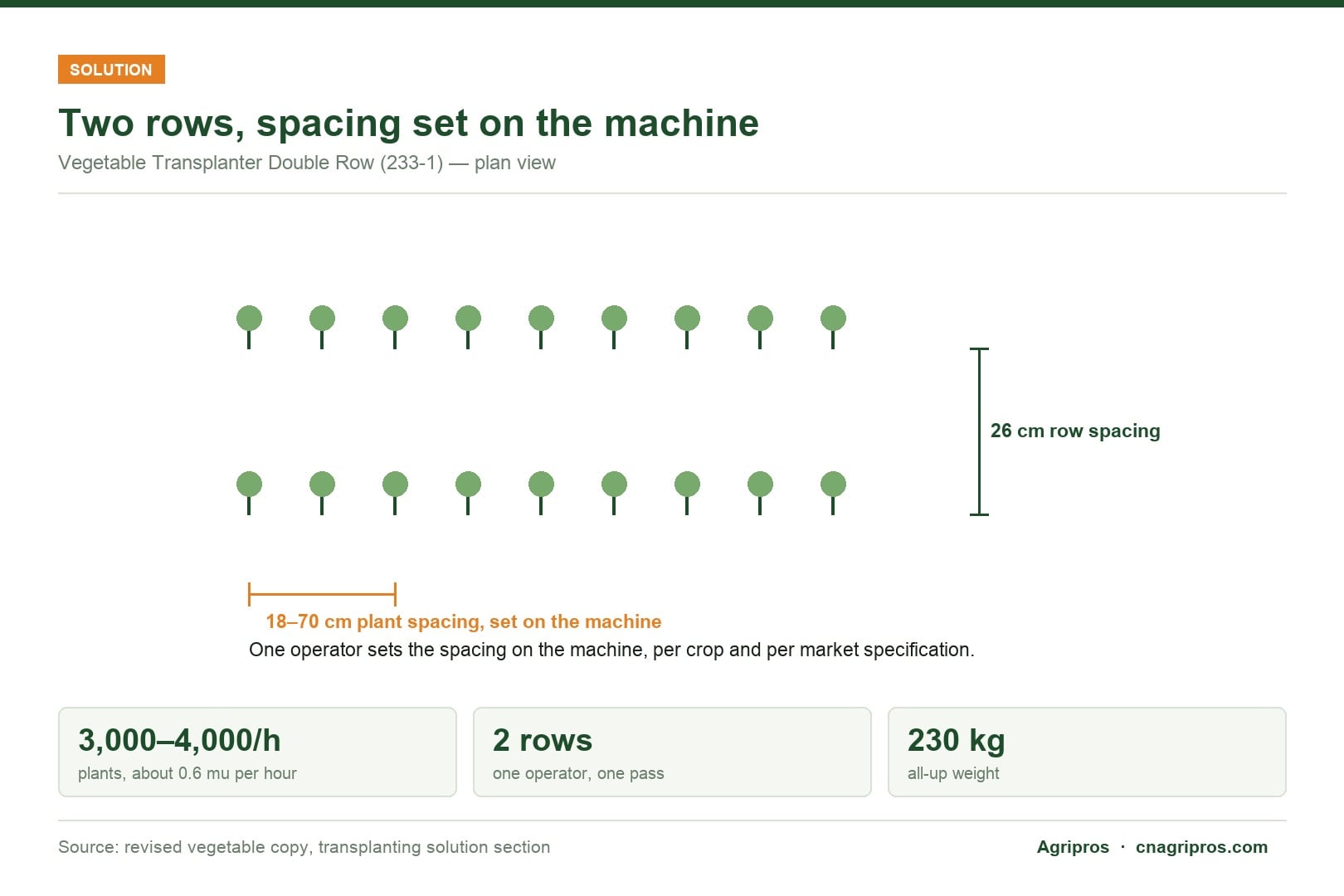
▲ The double-row self-propelled vegetable transplanter on a prepared bed
From inquiry to first pass
Five answers fix the configuration: crop, bed width and whether the bed is flat or ridged, target plant spacing, seedling tray format, and the area to be covered inside your planting window.
Two of those change the build rather than the setting. A ridged bed means a customized machine; a non-standard tray means the seedling delivery unit is set to that tray. Both are confirmed before the quotation, because neither can be corrected on the day of delivery.
The machine ships one set per package at 270 × 70 × 130 cm, 230 kg gross, from Guangzhou or Qingdao on FOB terms, with CFR and CIF confirmed per order. MOQ is one set and lead time is 20 days for a single set, with larger quantities scheduled against the order. A manual and specification sheet travel with the machine.
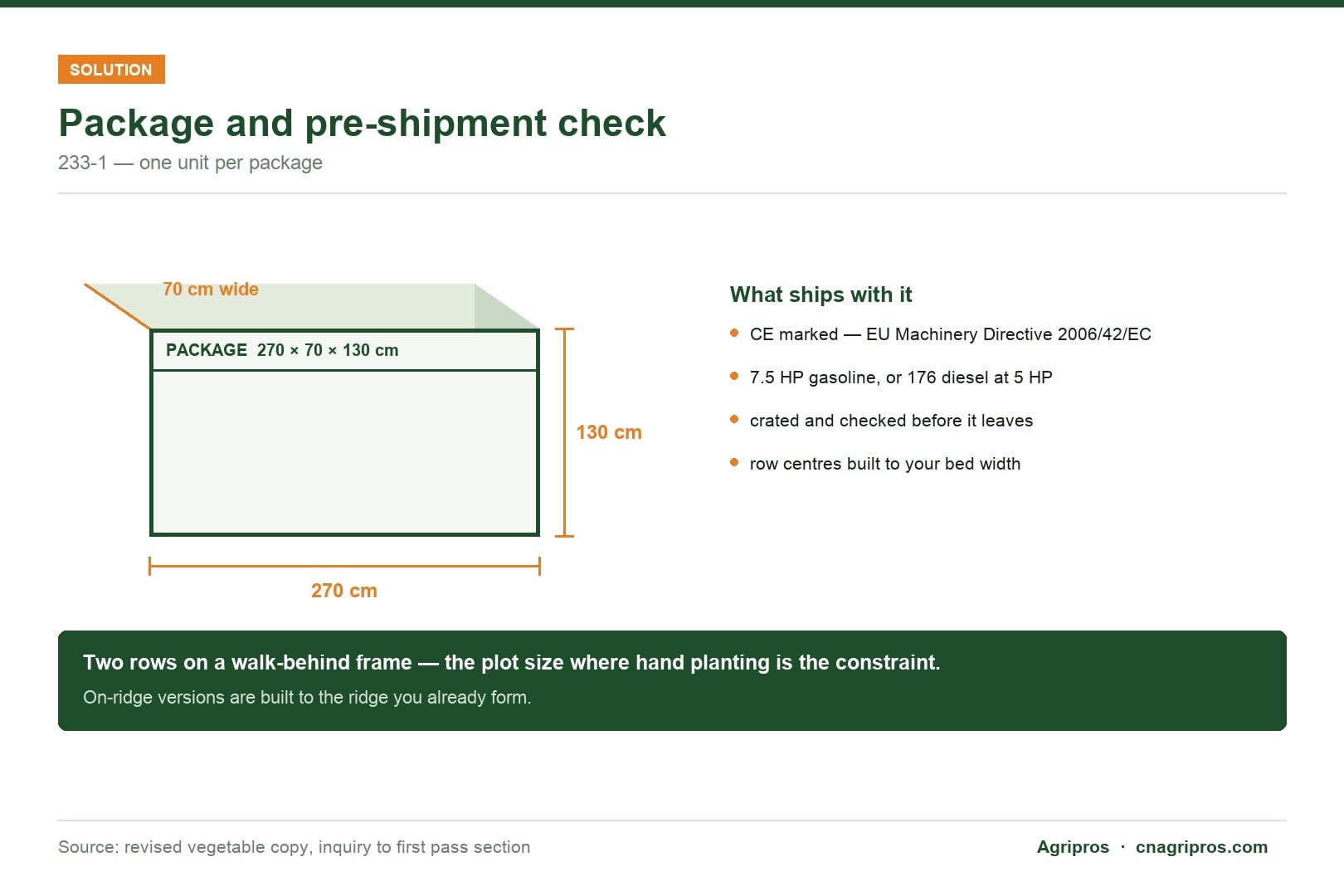
▲ Crating and pre-shipment check
FAQ
Which crops does it plant?
Chili, tomato and eggplant seedlings. It is built for that group; crops with different seedling geometry are a different build, and we will say so rather than quote this machine for them.
What plant spacing can I set?
18 cm to 70 cm, adjustable on the machine. That range is why one unit can serve different crops and different market specifications.
What is the row spacing?
26 cm as standard, with row centres customized to your bed width at order. It is set at build, not in the field.
How deep does it set the seedling?
Depth and soil closing are set for your soil type and bed preparation, and confirmed with your order. We do not publish a single depth figure because the right setting depends on the seedling and the ground — and a seedling set too deep buries the growing point.
Gasoline or diesel?
7.5 HP gasoline, or a 176 diesel rated 5 HP. Gasoline where the machine must stay light and the day is short; diesel for continuous commercial work where fuel cost and service access matter.
Can it work on ridges?
Not in the standard build. On-ridge transplanting is a customized machine built to your ridge geometry, so it has to be specified before the quotation.
Not sure which configuration fits your farm?
Crop mix, bed width and area differ from farm to farm. Send us the crop, the bed type and your target spacing, and we return the configuration and a quotation.
- Tell us your crops, whether the bed is flat or ridged, and your target plant spacing.
- Receive a configuration matched to your rotation, with a quotation, within one working day.
- Optional: a video inspection before the season, or a conversation with a grower already running the machine.
Product page: /vegetable-transplanter-double-row-for-chili-tomato-eggplant
Contact us: /contact-us
 EN