Where the loss happens
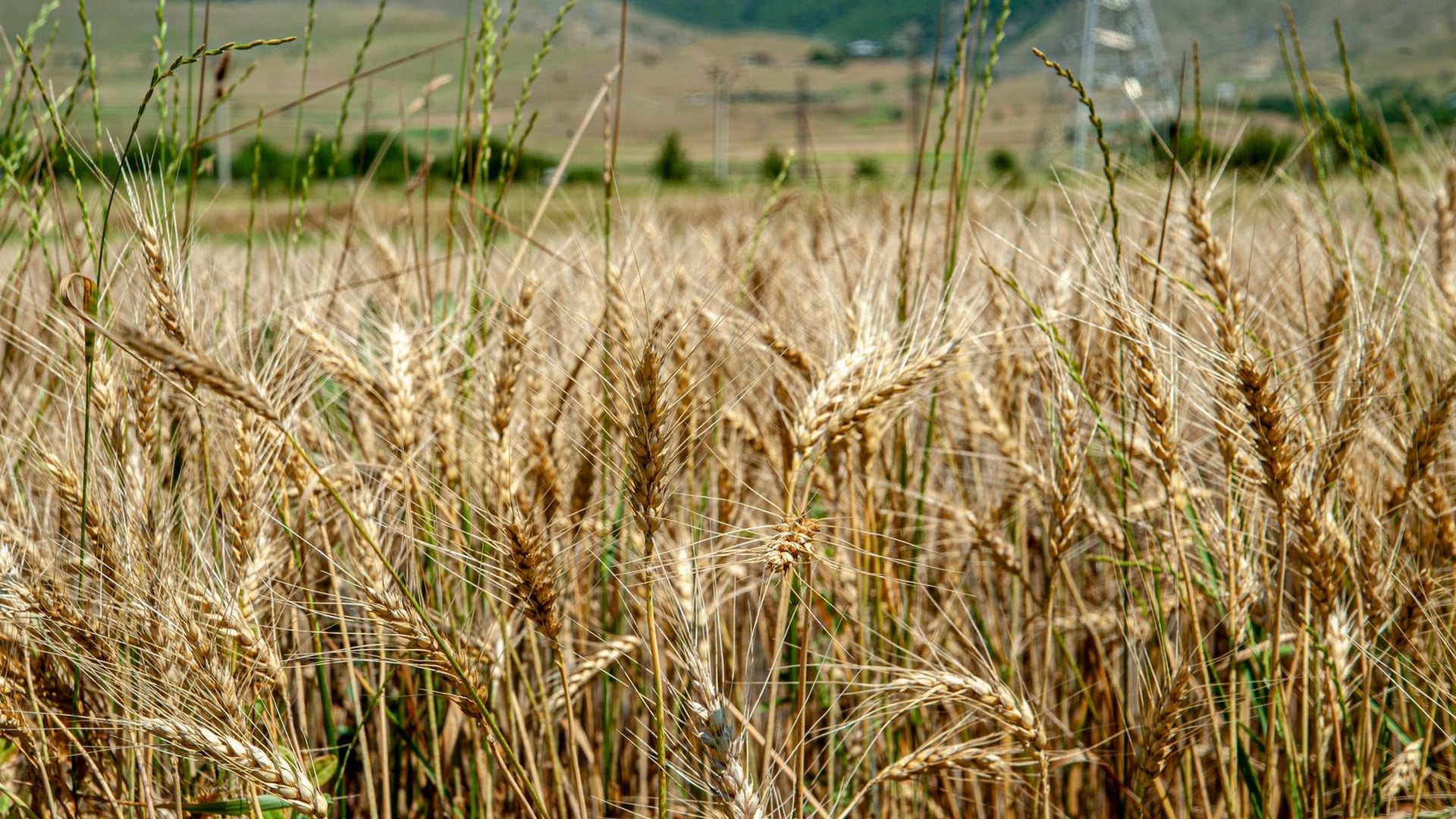
Wheat is a shallow-seeded crop and it is unforgiving about it. The seed belongs 20–50 mm below the surface: deeper and emergence is slow and uneven, shallower and the surface dries before the coleoptile reaches it. On a drill with no depth control, that range collapses into whatever the field happens to give you.
The second loss is row spacing. Row spacing is set by local agronomy and by the implements that follow the drill — the sprayer, the tramlines, the harvester — rather than by a single international standard. A drill built to the wrong spacing cannot be corrected in the field, only in the workshop, which is why the version is chosen from the width you actually work to.
The third is the fertiliser pass. Applying fertiliser separately from drilling means crossing the field twice, compacting the seedbed you just prepared and burning a sowing window that is already narrow in autumn-sown wheat. Where the drill carries its own fertiliser box, that pass disappears from the season rather than from the plan.
The fourth is tractor size. A large share of the world's wheat is grown on farms running small and mid-size tractors, and a drill that does not fit the tractor in the yard is not a solution. The row version has to be chosen against tractor power first and area second.
The drilling solution
The range is built around one metering principle: an external fluted roller driven from the ground wheel. No PTO, no hydraulic motor, no electronics — the seed rate follows forward speed because the drive comes from the land wheel, and the mechanism has almost nothing on it that fails in a village workshop. That is why the same design serves smallholders and large contract operations.
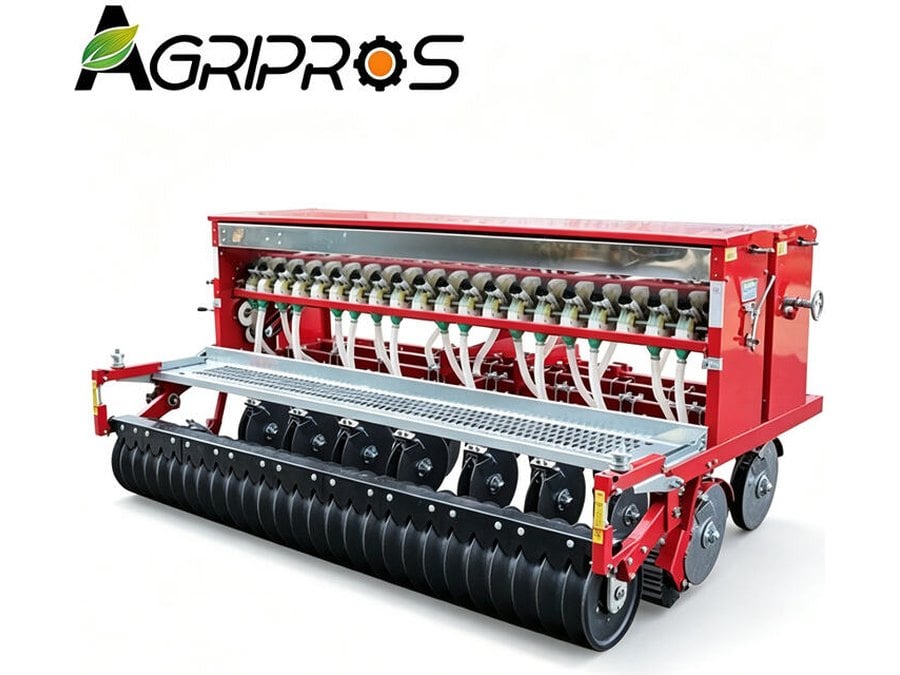
The machine is the Tractor Mounted 9-16 Row Seed Drill Grain Seeder for Wheat, built in four row versions. Row spacing and working width are fixed by the version rather than adjusted on the machine:
-
2BF-9 — 9 rows, 190 mm spacing, 1,710 mm width, 28–50 hp
-
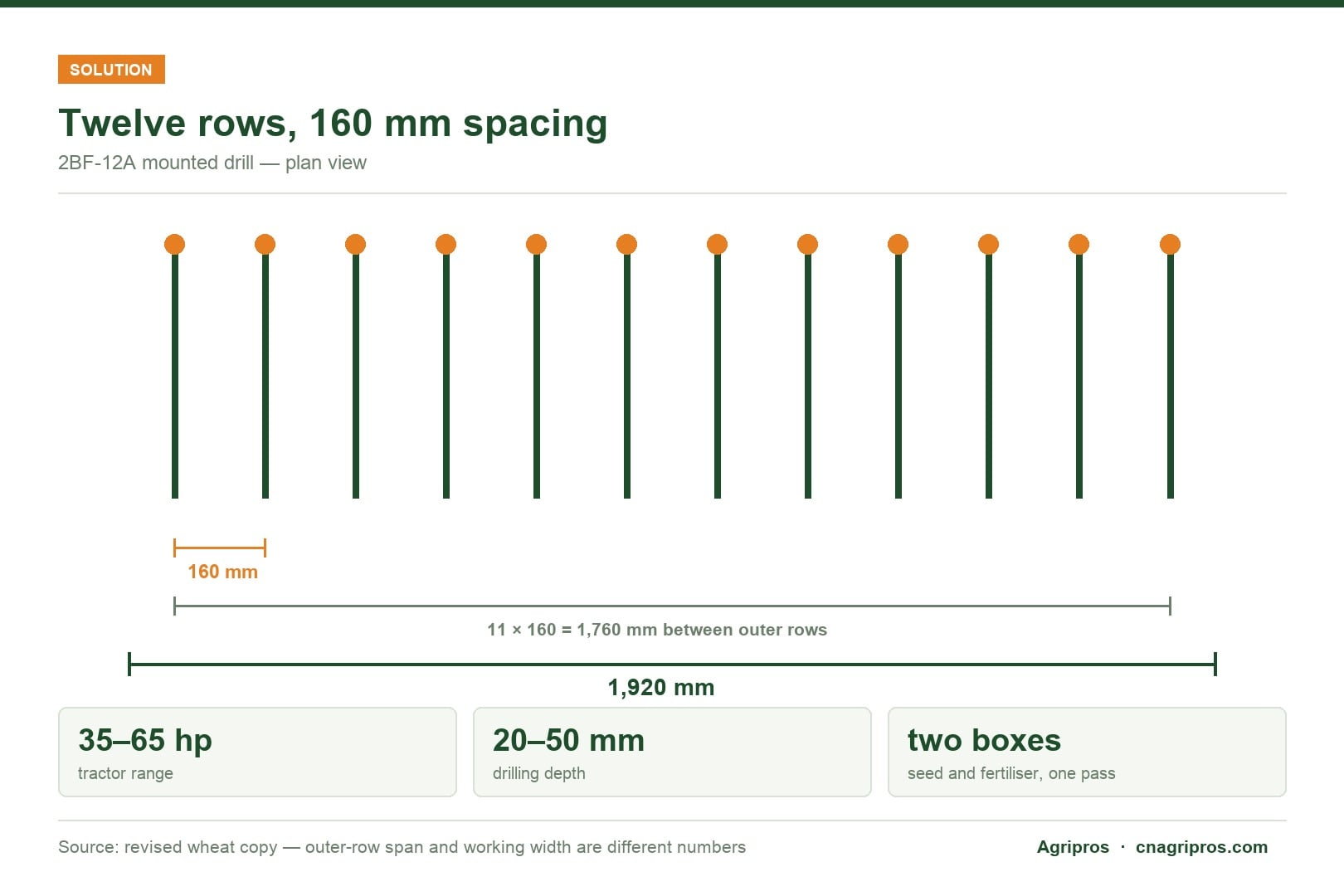
2BF-12A — 12 rows, 160 mm spacing, 1,920 mm width, 35–65 hp
-
2BF-14 — 14 rows, 150 mm spacing, 2,100 mm width, 35–70 hp
-
2BF-16 — 16 rows, 150 mm spacing, 2,400 mm width, 55–100 hp
All four share the same working principle. Depth adjusts across 20–50 mm. Seed and fertiliser sit in two separate boxes with independent metering settings, so the seed rate — adjustable up to 450 kg/ha — does not drag the fertiliser rate with it. One pass opens the furrow, sows, places base fertiliser, covers and presses.
Metering gears are changed to suit the crop, which is how one drill covers wheat, barley, oats, rice, soybean, sorghum, millet, rapeseed and alfalfa. Working speed is 2–5 km/h on all versions; at top speed the theoretical coverage is about 0.86 ha/h on the 9-row and 1.2 ha/h on the 16-row, with actual coverage set by field shape and turning time.
Recommended equipment
| Operation |
Recommended product |
Key specifications |
Main advantages |
| Wheat drilling, small and mid tractors |
2BF-9 (9-row) |
190 mm spacing | 1,710 mm width | 28–50 hp | 20–50 mm depth | two boxes |
Narrowest transport width; fits the tractors most farms own |
| Wheat drilling, mainstream agronomy |
2BF-12A (12-row) |
160 mm spacing | 1,920 mm width | 35–65 hp | 20–50 mm depth |
The spacing most wheat agronomy is built around |
| Wheat drilling, wider coverage |
2BF-14 (14-row) |
150 mm spacing | 2,100 mm width | 35–70 hp | 20–50 mm depth |
More rows inside a width a mid-size tractor can pull |
| Wheat drilling, contract and large blocks |
2BF-16 (16-row) |
150 mm spacing | 2,400 mm width | 55–100 hp | 20–50 mm depth |
Highest coverage per pass; about 1.2 ha/h theoretical at top speed |
All four versions seed and fertilise in one pass, with independent seed and fertiliser rates.
Scenario × drill quick reference
| Scenario |
Farm profile |
Recommended product |
Rows |
Tractor power |
Notes |
| Smallholder, narrow fields |
28–50 hp tractor |
2BF-9 |
9 |
28–50 hp |
1,710 mm width suits narrow and irregular fields |
| Mid-size farm, mainstream agronomy |
35–65 hp tractor |
2BF-12A |
12 |
35–65 hp |
160 mm spacing; two boxes, one pass |
| Farm moving up in area |
35–70 hp tractor |
2BF-14 |
14 |
35–70 hp |
More rows without stepping up a tractor class |
| Large farm, contract work |
55–100 hp tractor |
2BF-16 |
16 |
55–100 hp |
2,400 mm width; plan road transport |
| Multi-crop rotation |
Any of the above |
Any version |
9–16 |
Per version |
Metering gears changed per crop |
▲ Twelve-row mounted wheat drill in a prepared seedbed
From inquiry to first pass
Four answers fix the drill: tractor power, the row width your agronomy and following implements work to, seed rate, and the seedbed condition at sowing.
Row count follows tractor power more than farm size — an 18-row drill behind an underpowered tractor is a slower machine, not a faster one, which is why the four versions map to power bands instead of to hectares. We size the version to the tractor first, then confirm the metering gears for your seed rate and crop.
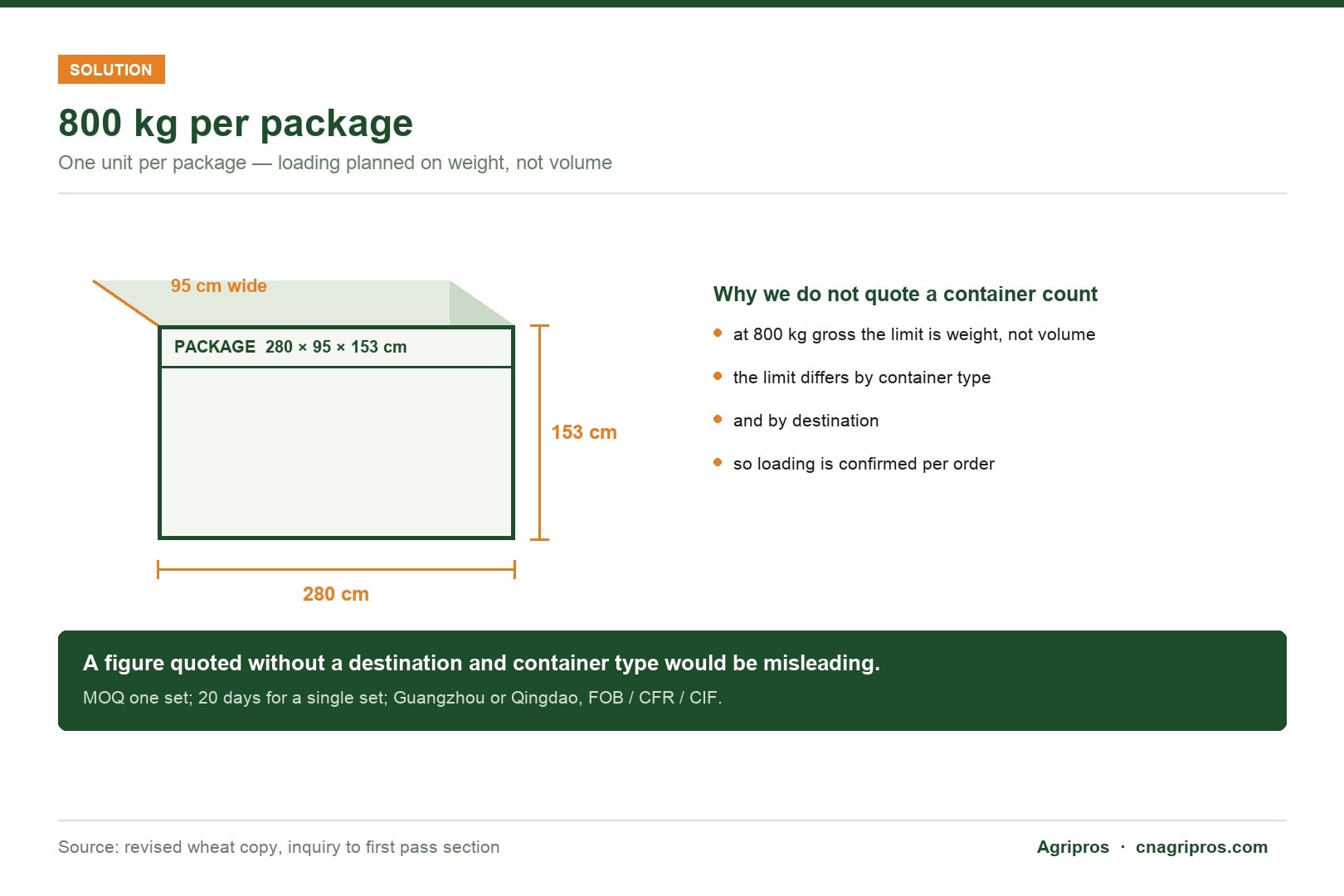
Shipping is one unit per package at 280 × 95 × 153 cm, 800 kg gross, in reinforced export packing. Container loading is planned against that package weight and confirmed per order — at 800 kg per unit the limit to check is weight rather than volume, and a mixed order is planned on the actual mix. MOQ is one set, 20 days for a single set, from Guangzhou or Qingdao on FOB, CFR or CIF terms.
▲ Container loading, mounted drills
FAQ
What is the minimum tractor power?
28–50 hp for the 9-row, 35–65 hp for the 12-row, 35–70 hp for the 14-row and 55–100 hp for the 16-row. All use the standard three-point hitch, so the hitch category is the second thing to confirm after power.
Can it apply fertiliser while drilling?
Yes, on every version. Seed and fertiliser sit in two separate boxes with independent metering, and one pass opens, sows, places base fertiliser, covers and presses.
Is the row spacing adjustable?
No. Spacing and working width are fixed by the version — 190 mm on the 9-row, 160 mm on the 12-row and 150 mm on the 14- and 16-row. That is why the version is chosen from the width you already work to.
Which crops can it handle?
Wheat, barley, oats, rice, soybean, sorghum, millet, rapeseed and alfalfa, with the internal metering gears changed to suit the crop. It is not a maize drill — maize needs a precision metering unit.
How many units fit in a container?
Loading is confirmed per order against the 280 × 95 × 153 cm package and 800 kg gross weight. At this package weight the constraint is weight rather than volume, so a figure quoted without a destination and container type would be misleading.
Not sure which configuration fits your farm?
Tractor size, seedbed condition and local agronomy differ from farm to farm. Send us your tractor power and the row width you work to, and we return the version, the metering setup and a loading plan.
- Tell us your tractor model, row spacing and seed rate.
- Receive a drill specification for your tractor, with a quotation, within one working day.
- Optional: a video inspection before the season, or a conversation with a customer already running the drill.
Product page: /tractor-mounted-9-16-row-seed-drill-grain-seeder-for-wheat
Contact us: /contact-us
 EN