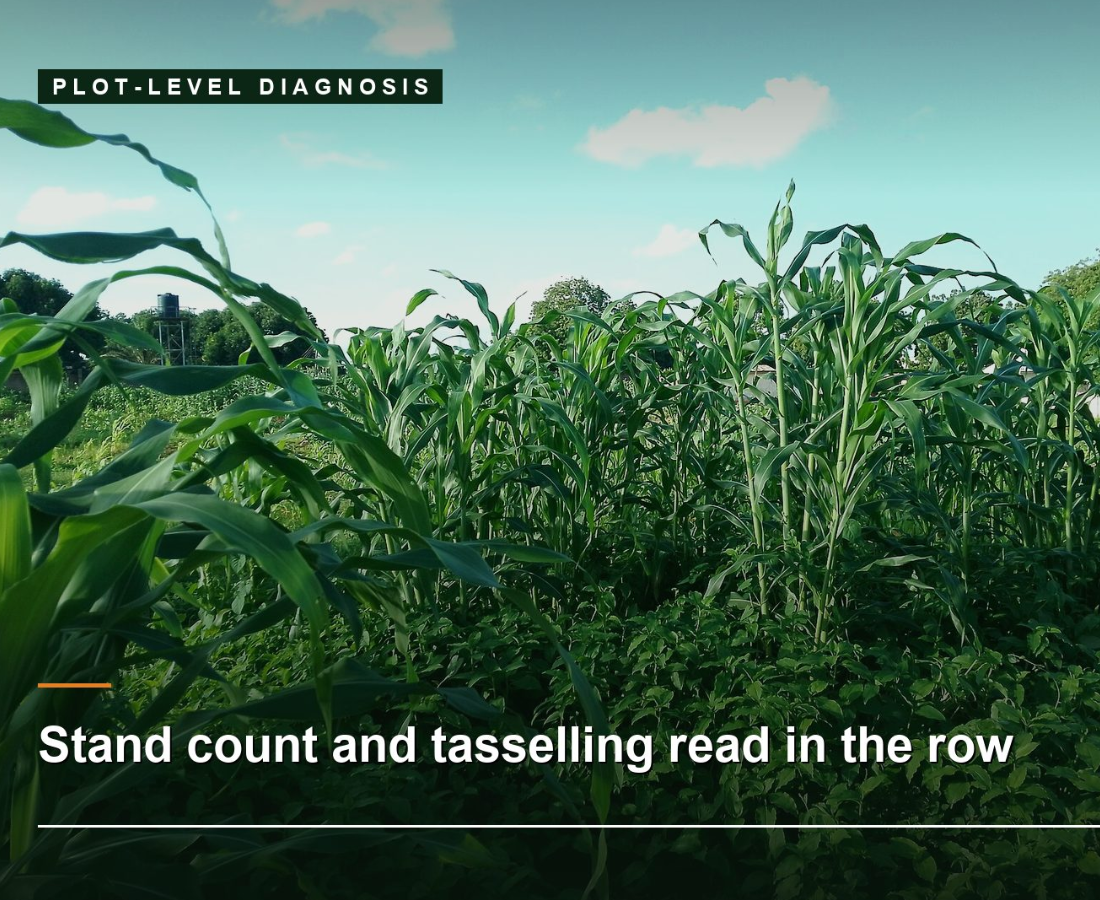
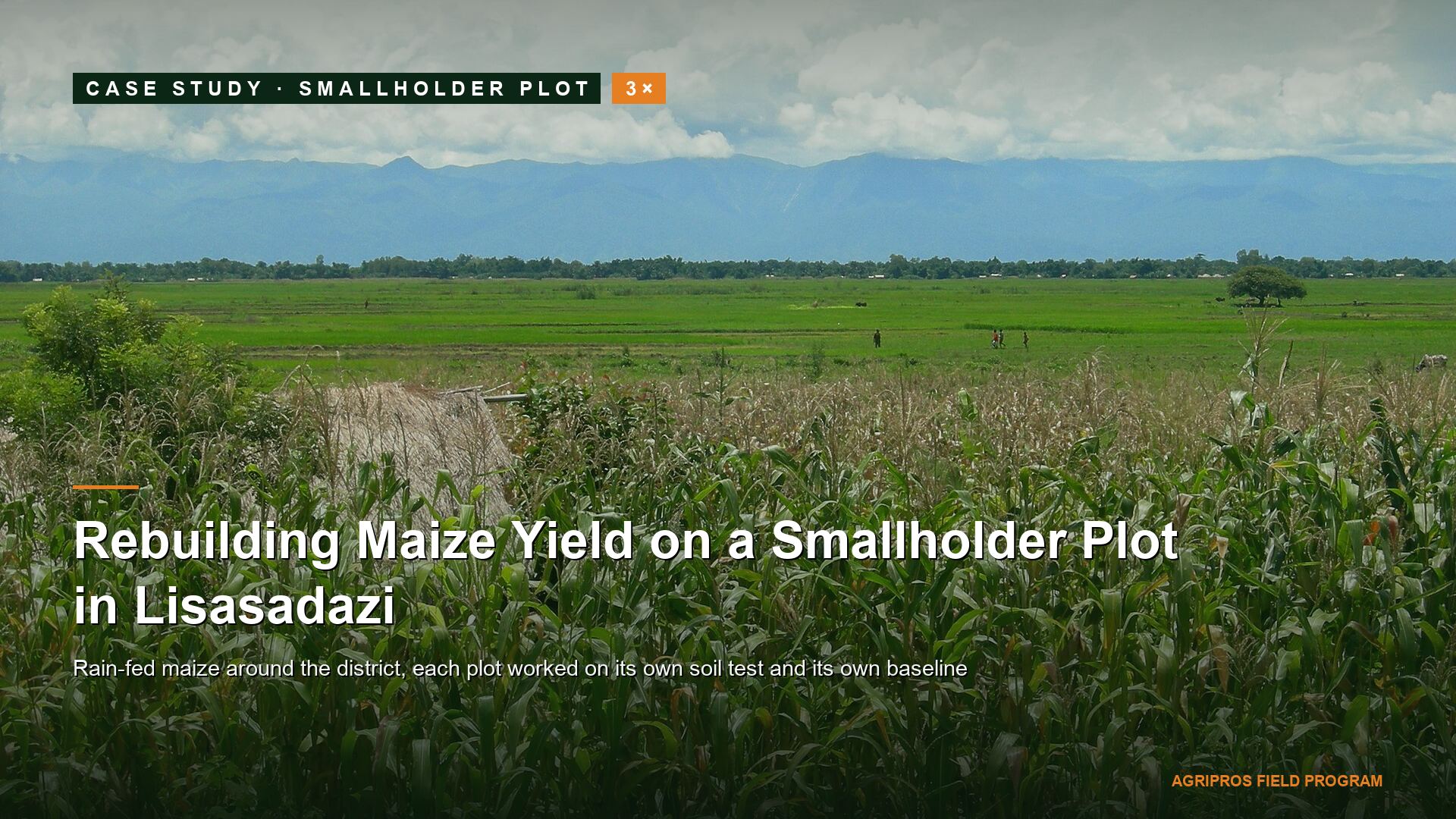
A plot in Lisasadazi, Malawi, was rebuilt with a validated practice package and the machine groups that apply it — the same pairing Agripros supplies as a repeatable system.
01 Project Background
Lisasadazi sits in a maize district where the same plot is planted to maize season after season, and where a household's decision about that plot is made with rain-fed water, unpaid family labour and a budget already committed elsewhere. This plot was the starting point for that reason: whatever became the Agripros Malawi Field Program had to run here first.
Agripros arrived from two directions. It supplies agricultural machinery through a sourcing, delivery and parts chain built for African farm sizes and for buyers who cannot wait a season for a replacement part. It also runs a field agronomy capability that diagnoses a plot, designs a practice package and validates it in field trials before issuing it. On a plot this size neither half works alone: the practice cannot be executed at the density and timing it needs without machines, and a machine has nothing to apply without a practice.
The background here is a delivery gap, not a technology gap. The agronomy was known, the machines were available, and nobody had assembled them into one season plan a household could run.
02 Field Diagnosis
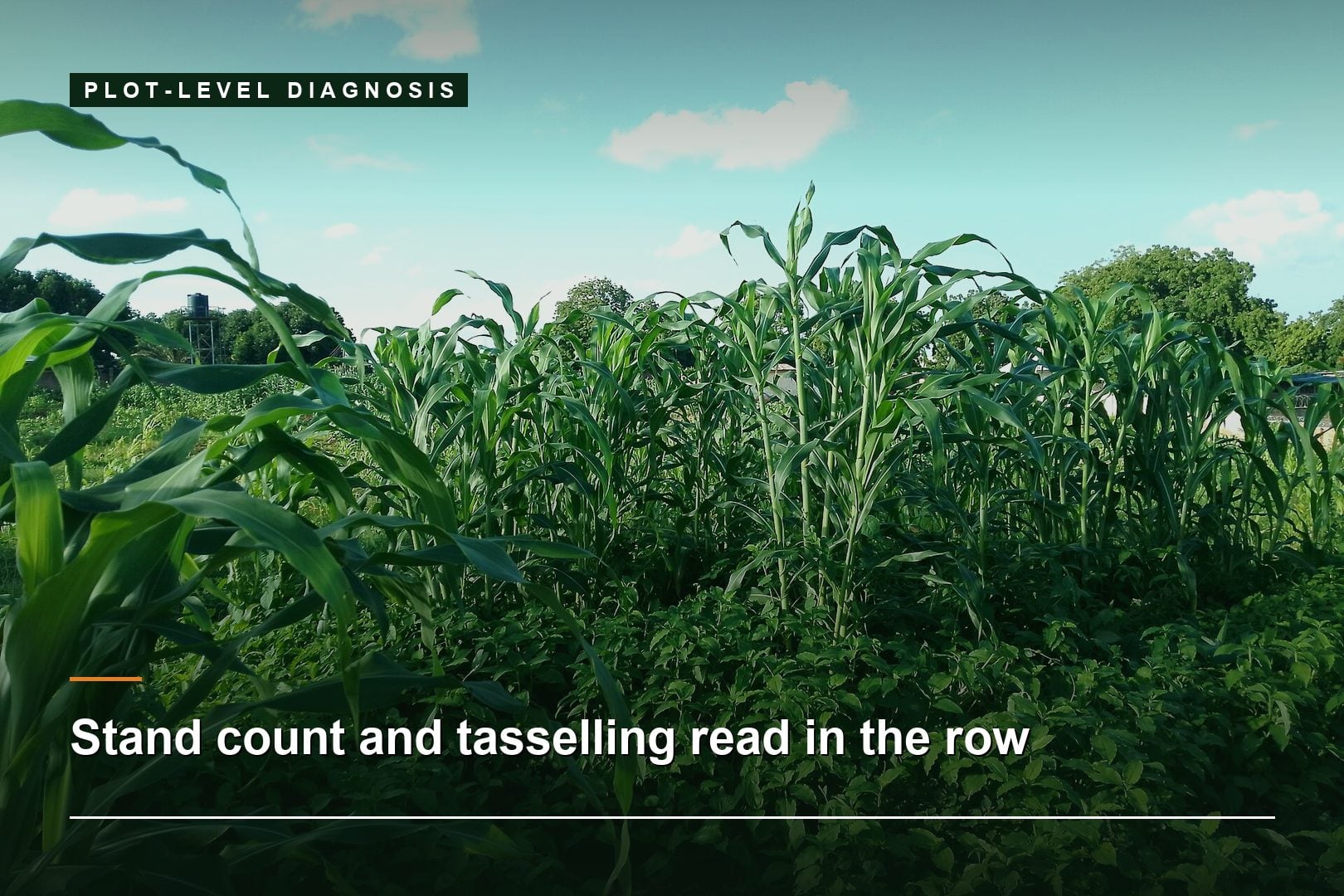
Soil was sampled for acidity and nutrient status before the season opened. Surviving plant population was counted on marked rows rather than estimated by eye. The previous harvest was recorded as grain weight at a standard moisture content, so the baseline and the trial harvest are compared on the same basis.
Three findings came back, ranked by what they cost the household. Fertility had been mined by continuous maize, and acidity was limiting what applied nutrient could do. Plant population sat below what the variety could carry, so the crop never filled the space it was given. Fall armyworm was present and untreated at the stage where control still pays back.
Each finding pointed at a different operation and a different point in the calendar, which is why the diagnosis had to precede any equipment decision. A population deficit is a seeding problem before it is a fertiliser problem. A late pest response is a spraying capacity problem before it is a product problem. Reading the plot this way is what allows a machinery supplier to specify against evidence instead of against a catalogue.
03 The Dual-Capability Solution
Agripros brought two capabilities to the plot; the case turns on how they were combined, not on either one alone. The agronomy capability set the practice: fertility built to a soil test from combined organic and inorganic sources, population set to what the variety could carry, pest control scouted against a threshold, nitrogen divided across growth stages, and the field split into three blocks — continuous maize, maize-soybean intercrop and a green-manure block.
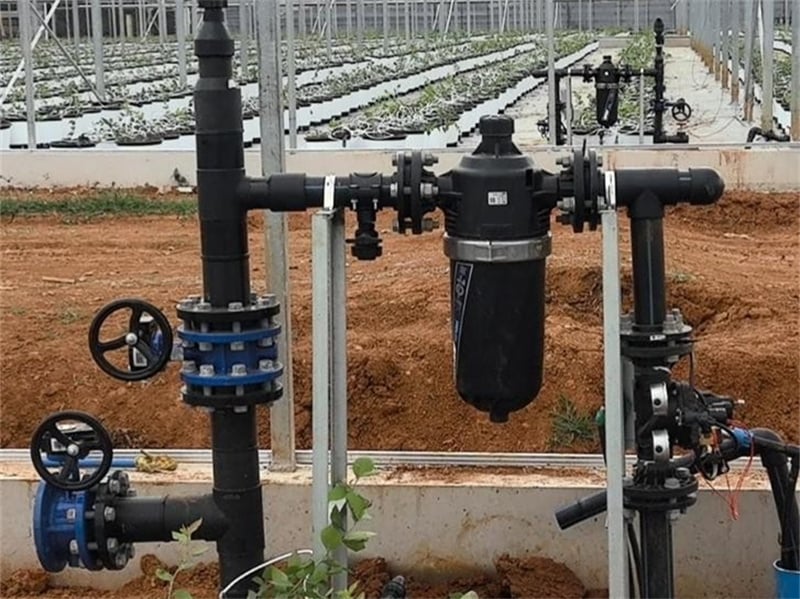
The supply chain capability made those decisions executable. A target population is only a number until a seeder from the Seeders & Transplanters line places seed at that rate and spacing. Three blocks with different seedbeds are prepared within one land-preparation window, with the implement reconfigured per block. A split top dressing and an early treatment window exist only if the right implement reaches the field on the date the crop needs it — a spreader for granular urea, a sprayer for crop protection — not when labour is free.
That is the argument for buying machinery and agronomy from one source: machinery without the practice is capacity with nothing to apply; the practice without the machinery stays a recommendation. Specified together, they produce a season plan where every operation has an implement, a date and a target.
TWO CAPABILITIES, ONE PLAN
- Agronomy — diagnosis · package settings · scouting calendar · harvest record
- Supply chain — machine selection · delivery · parts · operator training
- Output — one season plan with an implement assigned to each operation
04 Deployment
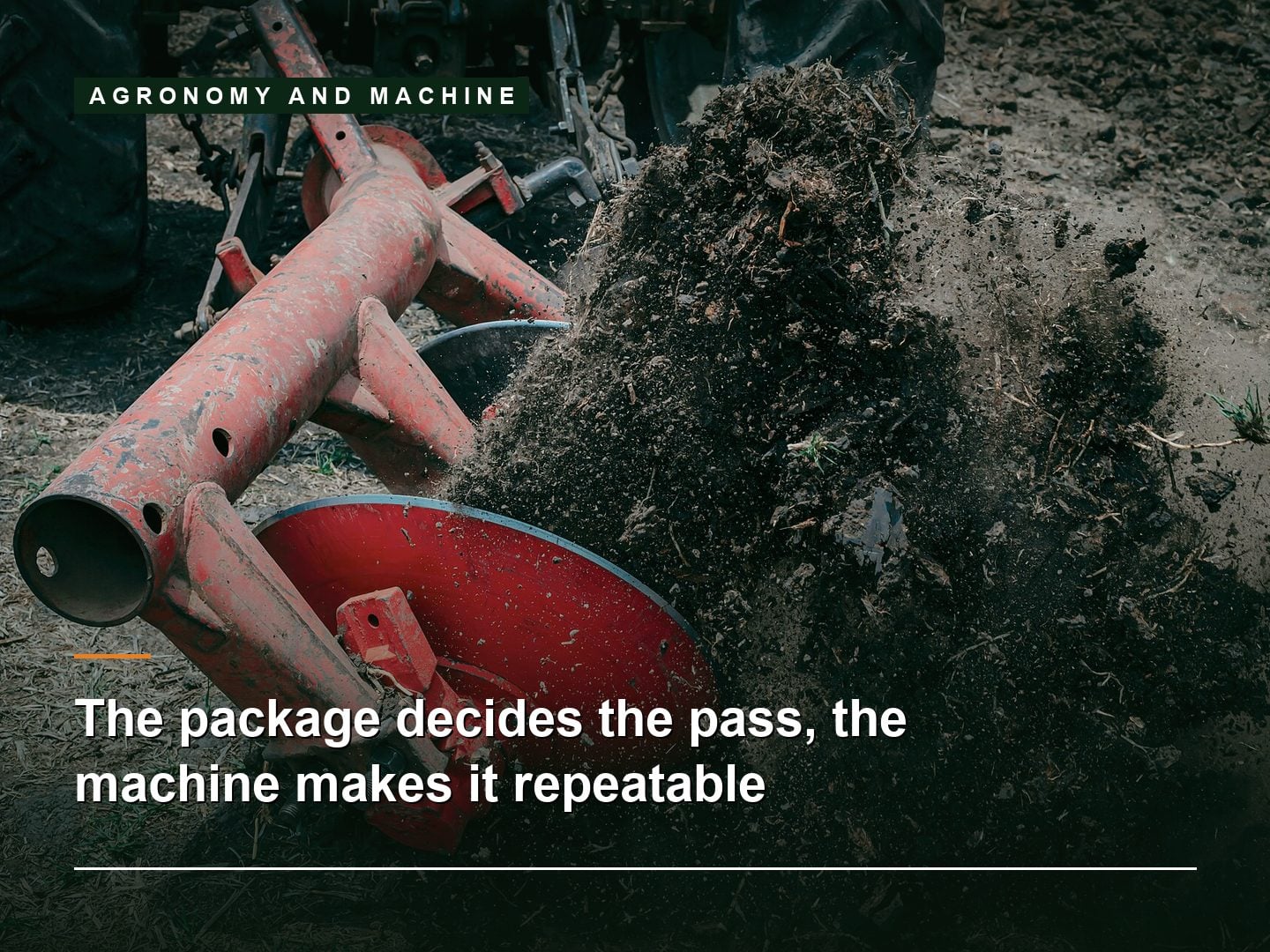
Deployment ran as one calendar rather than a series of purchases. Land preparation opened the season: a Cultivator & Tiller worked the basal fertiliser into the rooting layer, and the three blocks were laid out within the same land-preparation window. Planting followed, with a seeder from the Seeders & Transplanters line set to the target population for the variety in use, so density was placed rather than approximated by hand.
Where the diagnosis shows acidity, agricultural lime is broadcast and incorporated ahead of the planting window — not on the day of seedbed preparation — because lime needs time to move into the rooting layer before the seed goes in.
Scouting began at emergence on a fixed interval, with treatment triggered by a threshold instead of a calendar date. Split top dressing then followed the growth stages, broadcast as granular urea at each stage; the sprayer line was kept for crop protection, because a boom sprayer cannot apply granules. Equipment was specified for this plot size and a row configuration the household could operate, and the operator was trained on the same calendar the agronomist used.
One rule governed the sequencing: where a pass depended on a part that could not be replaced locally, the plan was changed before the season opened, not after the machine stopped.
05 Results
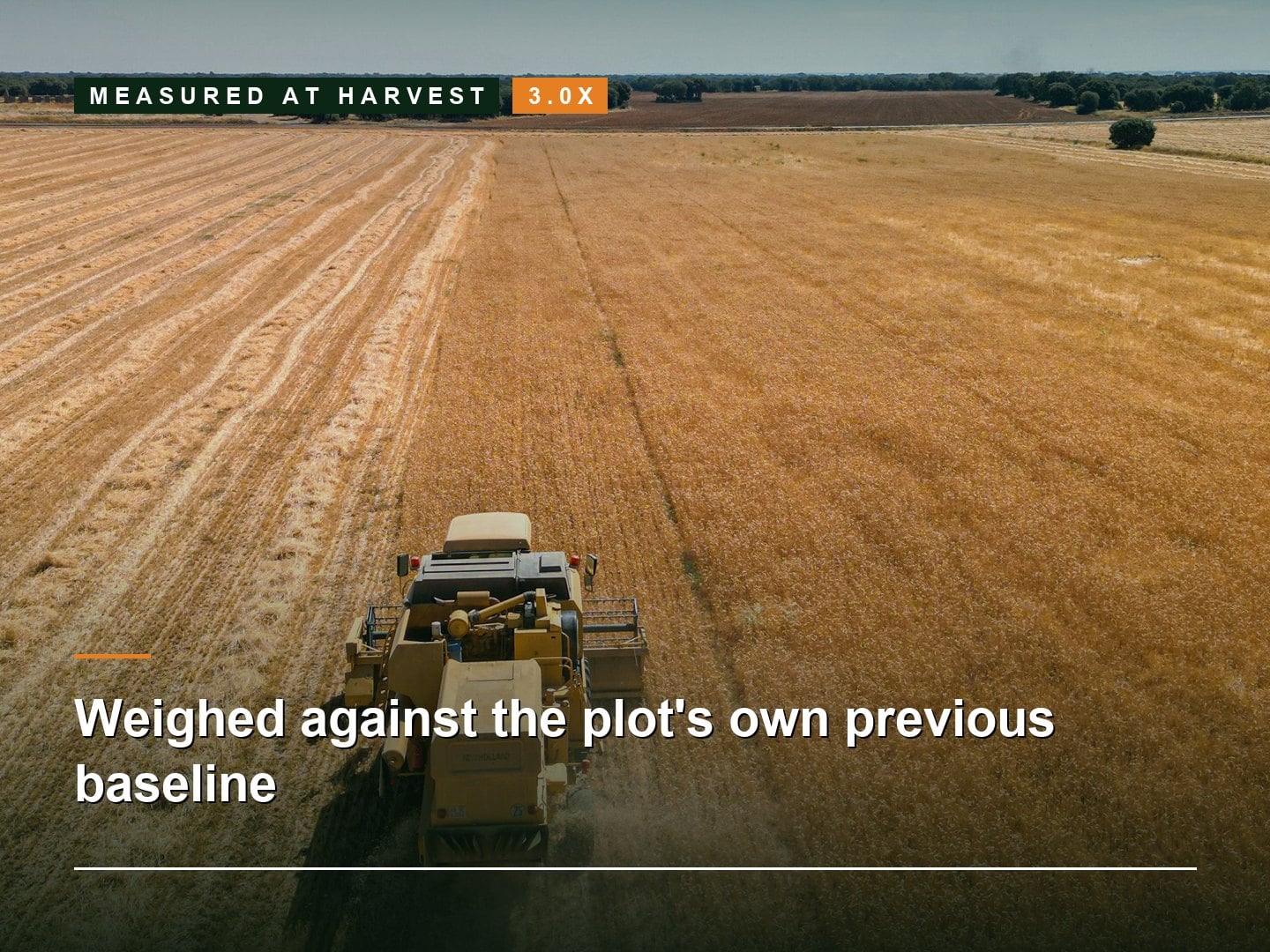
At harvest the plot returned a tripled maize yield against its own previous baseline, measured as grain weight at a standard moisture content. The figure comes from field trials and demonstration plots under service unit supervision. It is not a district, regional or national average, and it belongs to one plot on one soil group.
What changed was execution rather than scale. Fertility was replaced to a soil test, population was placed at the level the variety could carry, pest pressure was treated while the plant could still recover, and nitrogen arrived in two passes at the stages that build grain. The household kept a record per block, which is the part that outlives the season: the next plan starts from what these three blocks actually returned.
Economic return per hectare over a full commercial season is pending field validation. A tripled yield is a physical result; it is not yet a margin, and we do not present it as one.
YIELD RESULT
- 3× maize yield against the plot's own baseline
- Field trials and demonstration plots — not a district average
06 Why It Replicates
Replication here does not mean repeating the same instructions on a different plot. It means repeating four decisions — what the soil needs, what population the variety can carry, when to treat, and how to divide the nitrogen — with the machine settings recalculated for each field rather than carried over.
The unit of replication is fixed: one community, thirty farmers, fifty plots and one village. That keeps supervision measurable and the machine schedule workable, because implements are allocated across plots inside the same weather window. Within the unit, the demonstration plot shows the practice, thirty field trials per site test it across soil groups and management levels, and the harvest record closes the loop for the next season.
This is the difference between a good season on one farm and a production system a village can run. The household does not need to own every implement; it needs access to the right one on the right date, with a person trained to set it.
WHAT A COPY NEEDS
- Four decisions, recalculated per field
- Machine settings per plot size and row system
- Harvest record carried into the next season
07 Engaging Agripros
An engagement starts from four inputs rather than a machine list: the soil test result, the variety and target population, the rainfall pattern and planting window, and the plot area with its row configuration. Those four produce the package and the equipment specification in one round, which is the practical difference between buying from a machinery supplier and buying from one that also carries the agronomy.
From there the season plan is issued with every operation assigned to an implement and a date, the operator is trained against that calendar, and the parts position is fixed before planting rather than after a breakdown. Where the first season's records differ from the trial conditions, the settings are revised on the household's own data.
 EN